
Hazel's Journey: From Rescue to Recovery
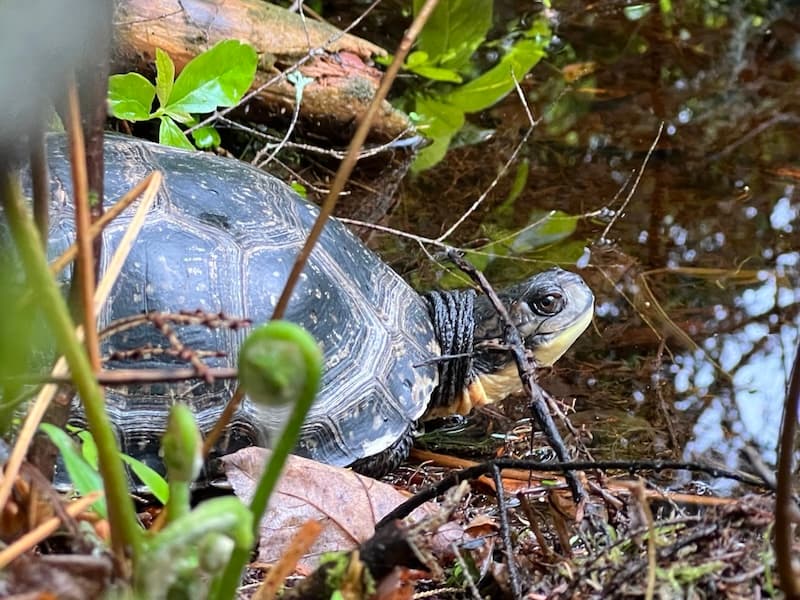
Hazel is adult male Blanding's turtle admitted in June 2023. He was admitted after being hit by a car, and sustained severe injuries primarily to his caudal carapace (top shell). After a long recovery journey, he returned back home to his wetlands in June 2025!
Blanding’s turtles are listed as critically endangered in New Hampshire and endangered by the IUCN.
These remarkable turtles can live more than 70 years in the wild! However, their long lifespan comes with a challenge: Blanding’s turtles don’t reach sexual maturity until they’re between 14 and 21 years old. That means they must survive for well over a decade before they can even begin to reproduce. Fortunately, once mature, they can reproduce throughout their lives—making longevity essential to the survival of the species.
Protecting their habitats is key. Blanding’s turtles rely on both wetland environments and surrounding upland areas for nesting and migration. By safeguarding these critical landscapes, we can help ensure that Blanding’s turtles continue to thrive for generations to come.
Read more about Hazel's journey below.
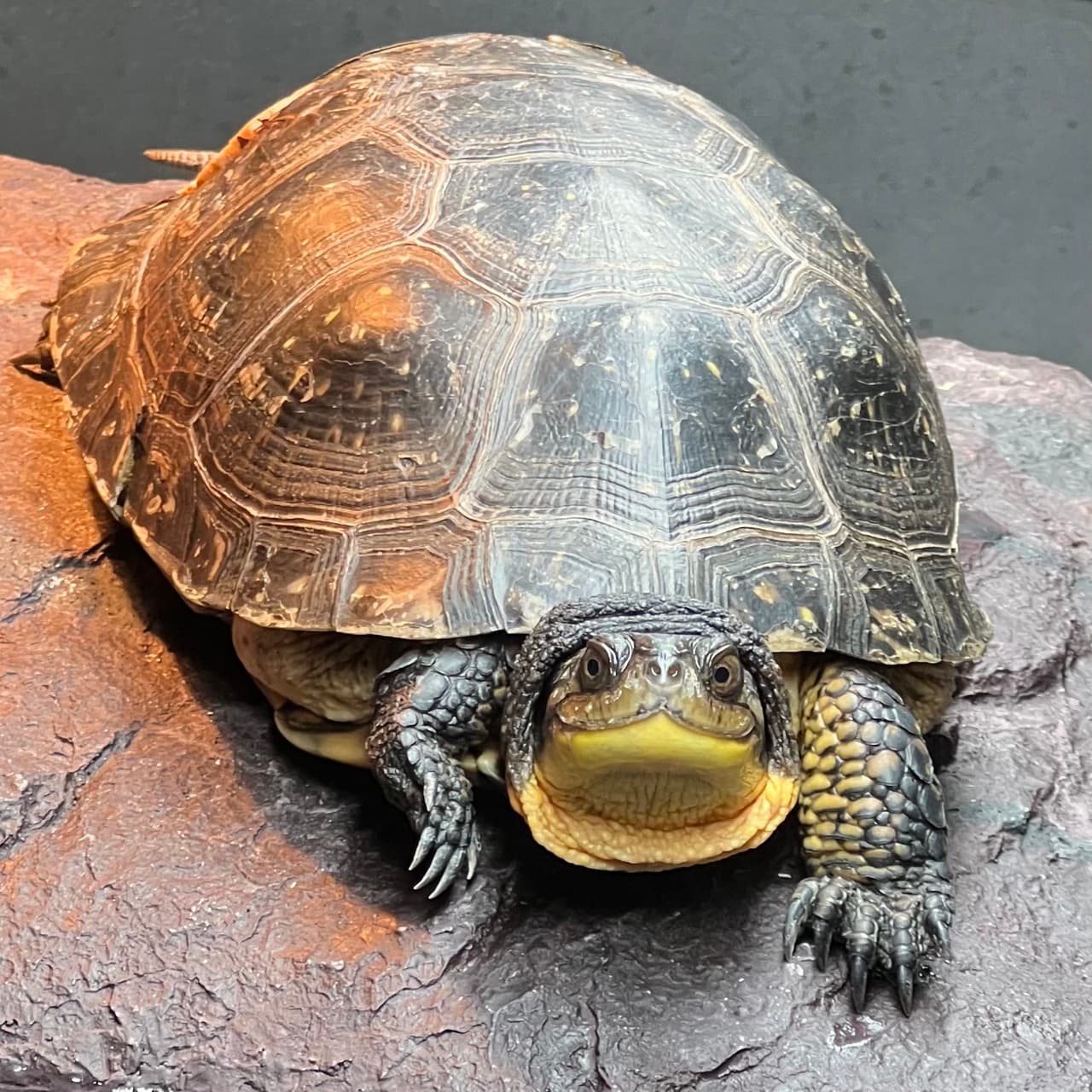
Hazel on his basking dock in his aquatic enclosure
I pull back the curtain to see big brown eyes staring right back at me. A long outstretched neck that is the brightest of yellows expands and deflates repeatedly. This is an adult male Blanding's turtle. His temporary rehab enclosure is a 110 gallon stock tank filled with water, and the basking platform is anchored near the heat lamp, but it's floated towards the area where I entered so he is surprisingly close. I quickly drop the food and leave to minimize my disturbance.
Hazel was admitted on June 10th, 2023, after being hit by a car. May through July is our busiest season - this is the middle of nesting season, when females travel far looking for suitable nesting locations for their eggs, and both males and females will be out and about moving between wetlands.
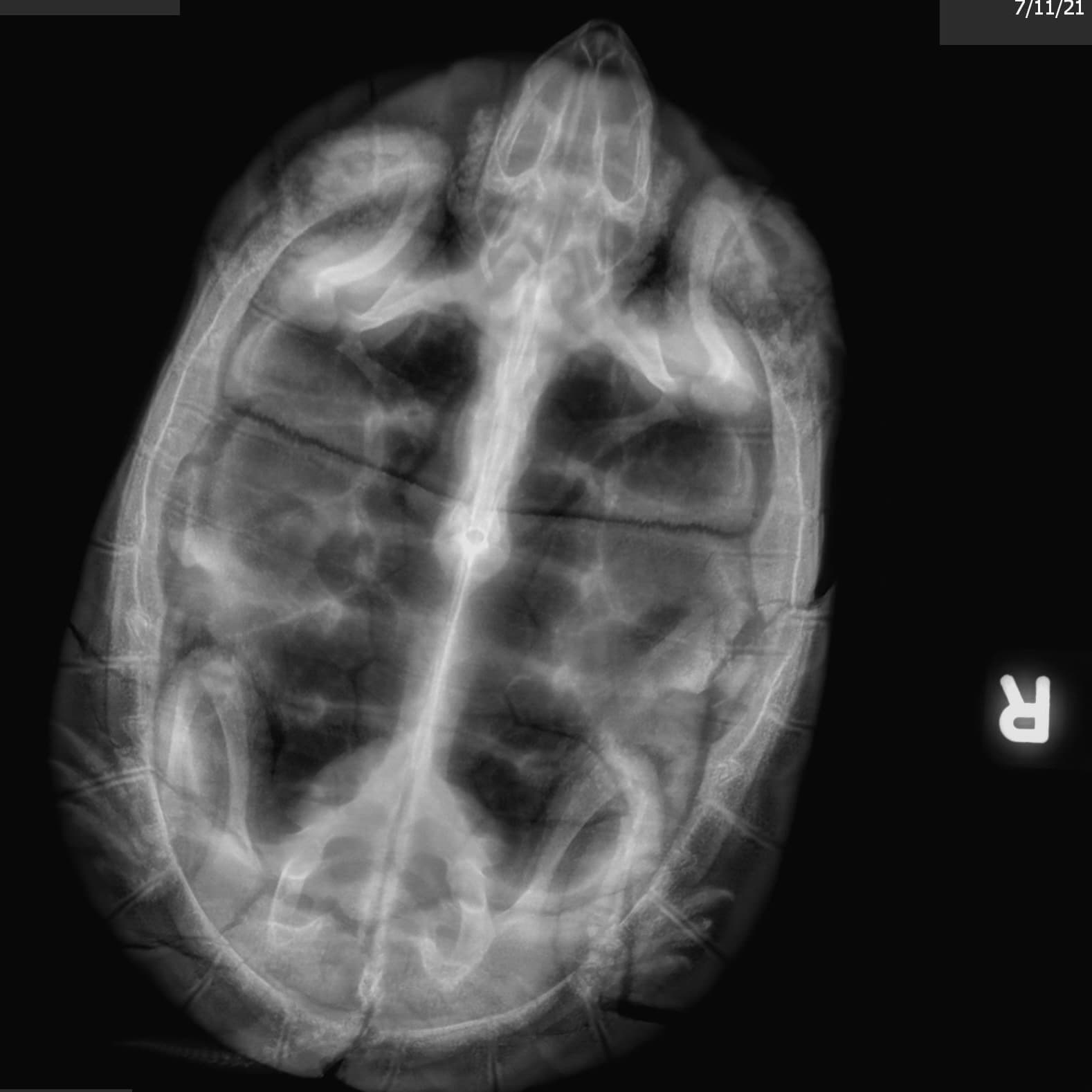
Radiograph of Hazel. Thanks to the team at Mitchell Animal Hospital for doing this xray!
When Hazel arrived there were severe fractures all along the back half of his carapace. The fracture lines branched every which way up his carapace (top shell), some reaching to about halfway up the shell. Some of the pieces were able to fit back together, allowing for the fusing of bone, but others were jagged and had broken pieces that prevented the edges from touching. But more concerning was that he lost a lot of blood, and was in rough shape.
The first 72 hours were a nail-biter, but he continued to improve, and we were becoming increasingly more hopeful he would survive. Our concerns became more directed at his potential paralysis. Hazel was not using his hind limbs at all. He tucked them high up into his shell, and dragged himself around by his front legs.
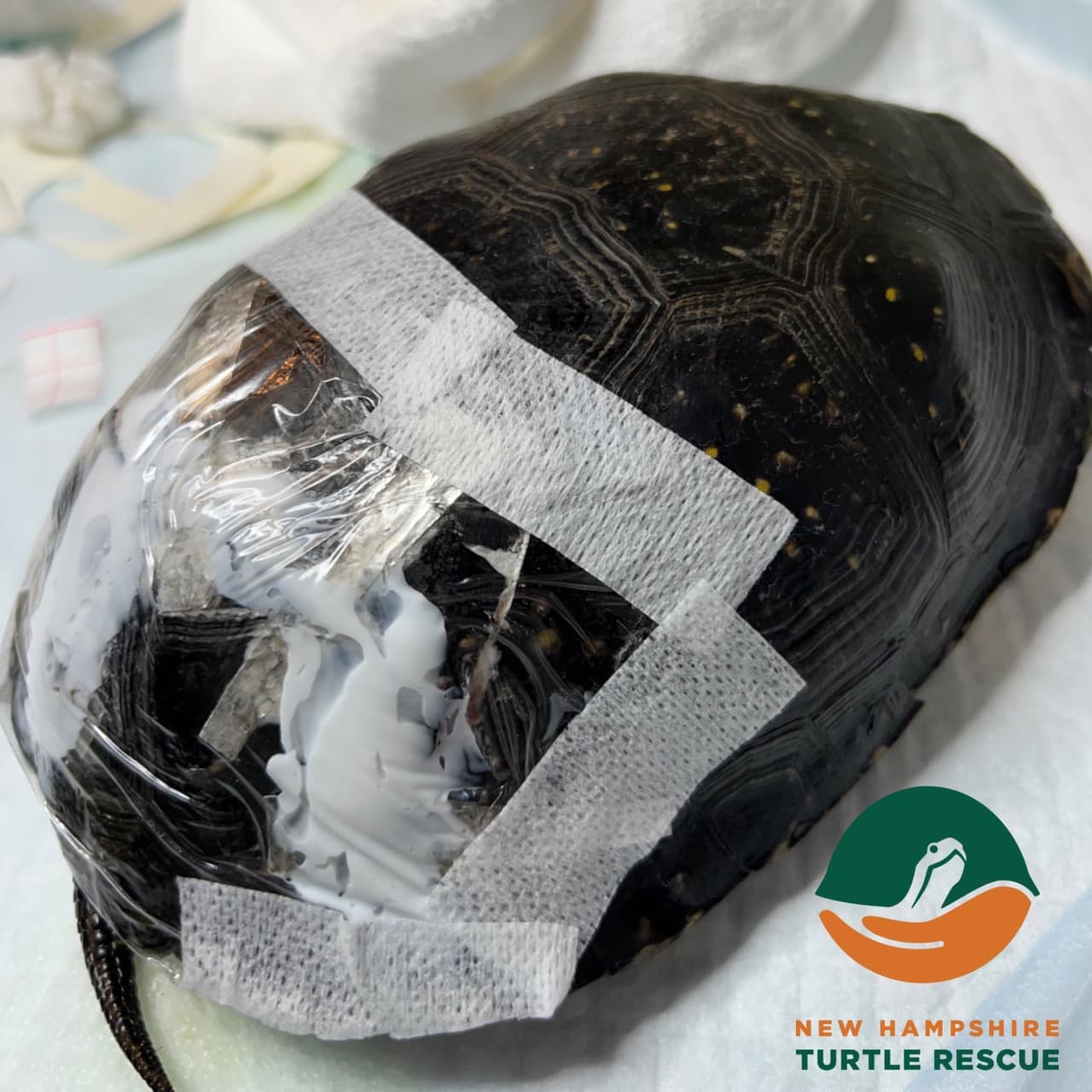
Bandages covering Hazel's carapace as he heals
It wasn't for another month (mid July) that we knew he was using his legs again. It was difficult to observe him because he is so incredibly shy (as most Blanding's are). The second I would enter his enclosure, he would immediately retreat into his shell. The times when I would be able to peak without his noticing, he was still dragging himself around by his hind limbs. After installing a security camera over his enclosure, we started noticing some hind limb use. It wasn't clear how much weight he was putting on his back legs, but it was really encouraging progress.
Hazel started using his back legs more and more. We placed him in an aquatic setup and he did great. He swims and swims and swims, and it's so exciting to see him use those back legs and exercise so his muscle function improves. He also gets up on his basking platform with ease, using both front and hind limbs. We're so excited and impressed with all the healing he's done, and grateful he's made such immense progress.
It's really encouraging that we are only in October 2023 and he's exercising his legs so frequently. We feel very hopeful he'll be ready to return home someday. He will at least be spending his winter with us, when he would normally be brumating, healing and building strength. 💪
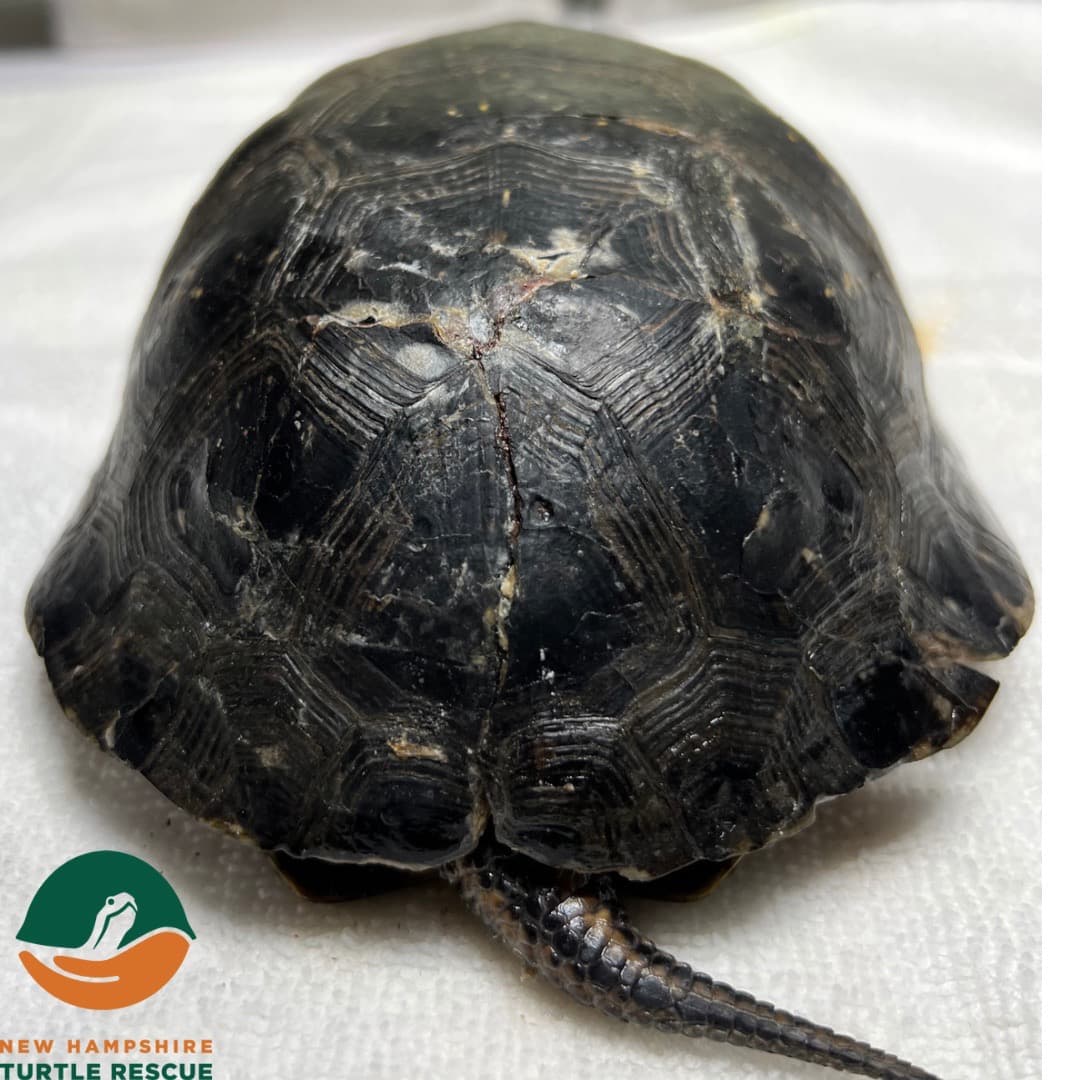
Hazel's shell after the hardware was removed
Hazel has also warmed up a lot. In wildlife rehabilitation we interact with each patient as minimally as possible, and Hazel is still surely scared of us, but it's comforting to see him more at ease. Hazel went from completely boxing up, retracting back into his shell anytime I was near, to basking with all limbs out, and keeping his neck outstretched as I entered. Part of that is his enclosure, as she got sizable upgrades as his mobility improved. Part of it is also where he's at in the healing process and his mobility, as he has to feel less cornered now that he can dash away. Overall, he is feeling better and better and it shows. We're so proud of how far he has come, and can't wait to help him get back home.
2025 UPDATE:Hazel has returned back home!Hazel ended up being with us for 2 years, and was released in June 2025.By spring 2024 he had made incredible progress, but we wanted to be sure he was as strong as possible before release and he wasn't quite there yet.We switched up his enclosure numerous times and he dealt with every setup extremely well, and by spring 2025 we knew we was ready.Check out Hazel's return to the wildhere on YouTube(or watch the video below).After release, Hazel came back to stare at us a while before heading into his home wetlands. Stay safe out there Hazel! We're all rooting for you.