
Oka's Rule
Oka was nesting when a man picked her up and stomped her nearly to death. Under current law, that would have been legal - he just had to wait five weeks.
New Hampshire Turtle Rescue has petitioned New Hampshire Fish and Game to protect every indigenous turtle species and their eggs from collection and possession.
Named for Oka, a nesting painted turtle nearly killed in Hillsborough in June 2026, the proposed rule recognizes that all native turtles belong in the wild and need protection throughout every stage of life.
Turtles can't speak up for themselves in the rulemaking process. You can. Read Oka's story below, then scroll to How You Can Help and tell NH Fish and Game you support closing this gap.
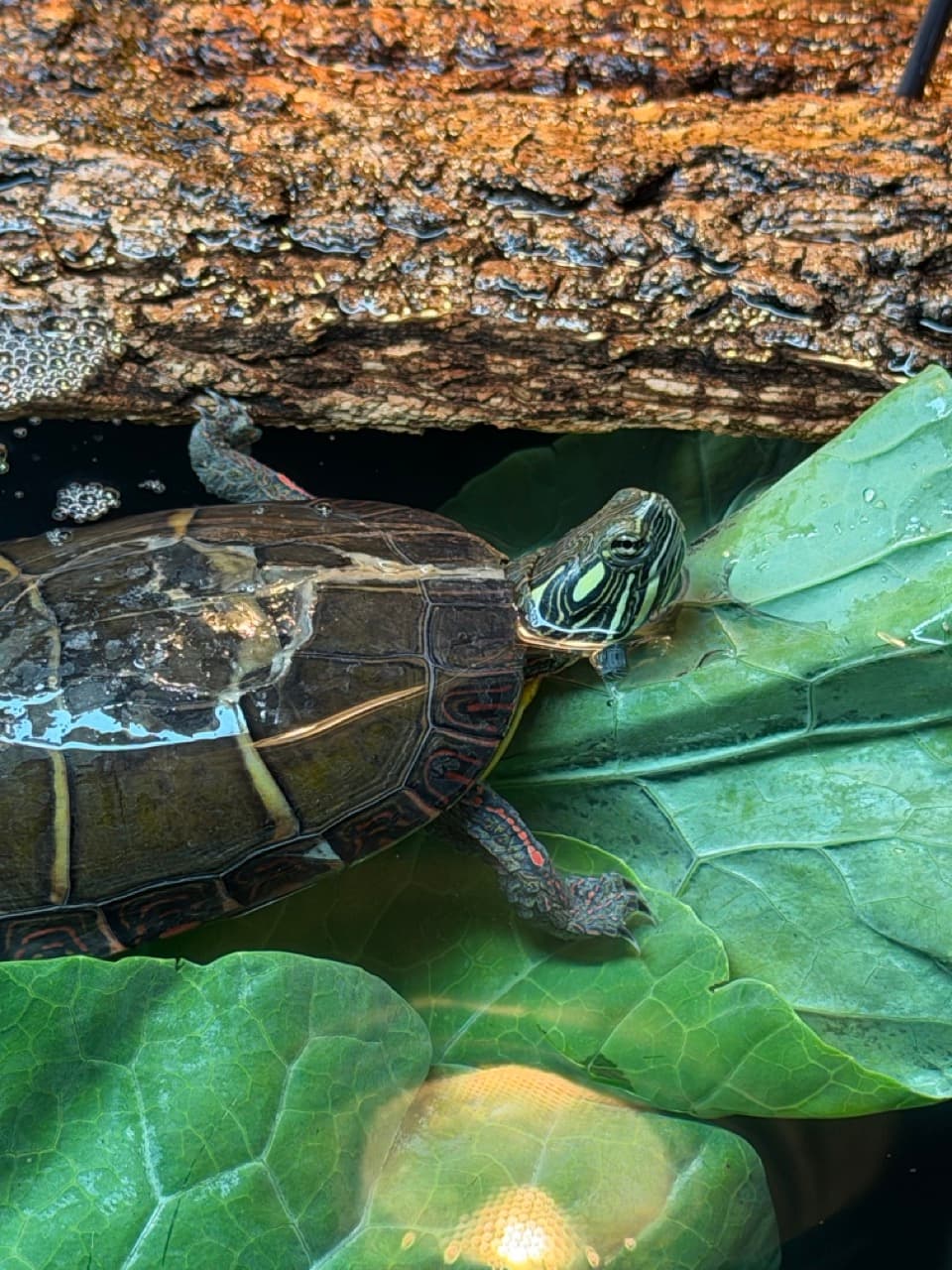
Petition for Rulemaking
On September 1, 2026, Drew Stevens and Dallas Huggins, New Hampshire permitted wildlife rehabilitators with New Hampshire Turtle Rescue, petitioned the New Hampshire Fish and Game Department pursuant to RSA 541-A:4 and Fis 214.01.
The petition requests rulemaking to amend Fis 1401.03 and Tables 800.1, 800.2, and 1400.2 to prohibit the take and possession of all indigenous turtle species and their eggs, except as authorized by a scientific permit, exhibition permit, conservation management authorization, or permitted wildlife rehabilitation activities.
This Is What Happened to Oka
Under current NH Fish and Game rules (Fis 1401.03), it is completely legal to capture a non-listed turtle species, like a painted turtle, by hand or by net outside the protected nesting season (May 15 to July 15), and then do whatever you want with it.
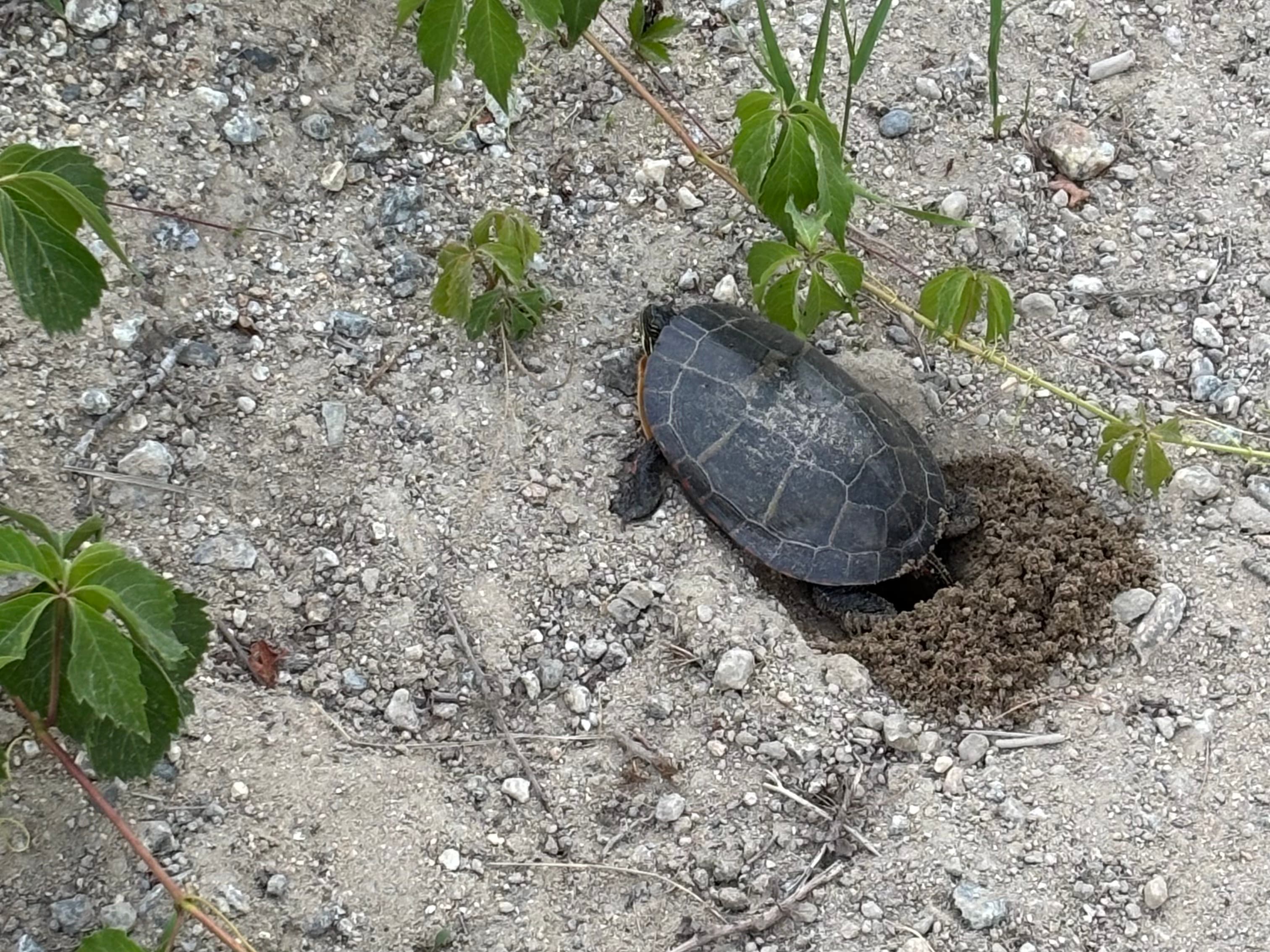
This is Oka. She was doing what turtles have done for millions of years - digging a nest to lay the next generation of turtles.
While she was laying her eggs, Charles Puccio picked her up and stomped on her. He has also intentionally killed many other turtles before and after this event. Oka survived and is recovering with us now. The others did not.
The photos below show the injuries Oka sustained. Viewer discretion is advised.
Oka's shattered shell after being stomped on.
Fractures to the bridge of her shell.
Did you know that if Charles Puccio had picked Oka up anytime before May 15th or after July 15th, he would have been able to stomp her to death with total impunity?
It is completely legal to kill up to two painted turtles per day in New Hampshire, as long as you physically pick them up first.
This is a huge gap in the protections afforded to our native turtle species, and it needs to change.
We have been surprised by the amount of attention it has received, and very encouraged by the outpouring of public support and desire to better protect wildlife in New Hampshire. We know people want change, and we have been diligently working on a solution to meet that demand.
Turtles are extremely long-lived compared to other wildlife and take a very long time to reach reproductive age. The stability of their populations depends on adults like Oka remaining in the wild long-term. Allowing the "take" of these species has far reaching impacts.
We can use your help! Please let NH Fish and Game know that you support stronger protections for our native turtles.
🐢 How You Can Help
1. Read the Full Petition
Scroll down to read the many reasons why this change is critical, as well as the complete petition.
2. Email NH Fish and Game's Executive Director
Reach out to [email protected] and let them know you support the petition for Oka's Rule.
3. Share This Page
Share this page and Oka's story, and ask your friends and family to lend their support too. Together, we can make a meaningful change to protect wild turtles in the Granite State.
Proposed Amendments
Current rules allow limited seasonal take of musk, painted, and snapping turtles. Oka's Rule would end that exception while retaining permitted possession of parts, such as shells, of non-listed indigenous species.
Tables 800.1 and 800.2
Remove Permittee Category 1 for musk turtle (Sternotherus odoratus), painted turtle (Chrysemys picta), and snapping turtle (Chelydra serpentina).
Fis 1401.03 Reptiles
Amend subsection (a) to read:
No person shall take or possess a spotted turtle (Clemmys guttata), Blanding's turtle (Emydoidea blandingii), wood turtle (Glyptemys insculpta), Eastern box turtle (Terrapene carolina carolina), or any egg or part thereof.
No person shall take or possess a musk turtle (Sternotherus odoratus), painted turtle (Chrysemys picta), snapping turtle (Chelydra serpentina), or any egg thereof.
No person shall take or possess a black racer (Coluber constrictor), timber rattlesnake (Crotalus horridus), Eastern hognose snake (Heterodon platirhinos), or any egg or part thereof.
- Leave subsections (b) and (c) unchanged.
- Repeal provisions authorizing seasonal take of indigenous turtles.
- Repeal size-based authorization for taking snapping turtles.
Table 1400.2 Reptiles
Remove musk turtle, painted turtle, and snapping turtle from Table 1400.2, which specifies which reptiles may be legally taken.
Supporting Arguments
The recent wildlife cruelty conviction arising from the Hillsborough turtle case generated widespread and unanimous public demand to increase protections for native turtle species. Although the individual was not charged for the taking and stomping of the nesting female painted turtle (“Oka”) due to insufficient evidence, it does present the opportunity to highlight a significant gap in the current regulatory framework.
While Fis rules regulate when certain turtles may be taken, there appears to be no corresponding rule establishing standards for the humane treatment or dispatch of turtles that are legally taken. As a result, outside of protected periods and other applicable restrictions, a person may lawfully capture a non-listed indigenous turtle by hand pursuant to Fis 1401.01(b), and then do whatever they want with it.
The practical effect of this regulatory gap is that a turtle encountered immediately before or after the protected nesting season could be legally captured and subjected to methods of killing – such as stomping – that would be considered inhumane and heinous. While such actions may be uncommon, this is particularly concerning for long-lived species such as turtles, which are widely recognized and valued by the public and whose conservation depends heavily upon the survival of adult individuals.
Allowing any legal take of indigenous turtles is increasingly difficult to justify from a conservation perspective. Native turtle species share many of the same biological characteristics that make them particularly vulnerable to population decline, including delayed maturity, low recruitment rates, and a dependence on high adult survivorship. The removal of adult turtles, especially large and reproductively active individuals, can have lasting impacts on local populations regardless of whether the species is currently listed as threatened or endangered.
Granite Staters love and cherish their wild turtle populations and overwhelmingly support a uniform ban on the take of any indigenous turtle in New Hampshire.
While all indigenous turtles are protected from take during the nesting season (May 15 to July 15; Fis 1401.03(b)), these protections do not extend through the period when eggs remain in the nest and hatchlings emerge. Most turtle nests in New Hampshire hatch between mid-August and mid-September, creating a substantial gap during which unhatched eggs and newly emerged hatchlings may be lawfully disturbed, collected, or otherwise harmed despite their critical role in sustaining future populations.
This gap is particularly concerning because the eggs of most indigenous turtle species are virtually indistinguishable from one another. As a result, it is often impossible for members of the public or conservation officers to determine whether a nest contains eggs of a common species or those of a state-listed species. Consequently, activities that impact unprotected nests may inadvertently result in the take of protected species and undermine ongoing conservation efforts.
Given that native turtle populations already experience exceptionally high rates of nest predation, hatchling mortality, and low recruitment into the adult breeding population, every successful nest represents a valuable contribution to future population stability. Extending uniform protections to nests, eggs, and hatchlings would help reduce avoidable human-caused losses, close a significant regulatory gap, and better align protections with the biological realities of turtle life history and conservation needs.
New Hampshire's native turtle populations are characterized by slow growth, delayed sexual maturity, low juvenile survival, and reliance on high adult survivorship to maintain stable populations. Removal of even small numbers of adult turtles can result in long-term population declines that may take decades to reverse.
Unlike many game species, turtles cannot readily compensate for increased adult mortality through rapid reproduction.
Freshwater turtles exhibit one of the most vulnerable life-history strategies among vertebrates. They reach sexual maturity slowly, experience high mortality during egg and juvenile stages, and depend upon long-lived reproductive adults to maintain stable populations. Research has demonstrated that even small increases in adult mortality can cause population declines and eventual local extirpation.
For example, Heppell (1998) determined that population growth in long-lived reptiles is far more sensitive to adult survival than to reproductive output, meaning that removal of breeding-age individuals can have disproportionate effects on population viability.
Iverson and Smith (2023) found that survival rates in snapping turtles increase with size, especially for females, placing a high value on the largest and oldest individuals to sustain that local population. Snapping turtles exceeding 15 inches in carapace length (i.e., the most likely to survive and reproduce year after year) can currently be legally taken outside of the protected nesting season.
A population of snapping turtles in Ontario that were decimated by river otters and lost 40% of the adult population still had not recovered 23 years later, with the number of adult females found by Keevil et al. (2018) to be at only 60% of the original population.
Taken together, the scientific evidence is clear: the long-term viability of New Hampshire's native turtle populations depends overwhelmingly on the survival of adult breeding individuals. Because turtles mature slowly, experience high mortality in their early life stages, and cannot rapidly replace lost adults, the removal of even a small number of large reproductive turtles can have consequences that persist for decades.
Without stronger safeguards for adult turtles, particularly large breeding females, New Hampshire risks continued population declines that may prove difficult, if not impossible, to reverse within a meaningful conservation timeframe.
Many of New Hampshire's indigenous turtle species are difficult for members of the public to identify accurately, particularly when encountered as hatchlings, juveniles, or nesting females. Species that are protected from take under current regulations can closely resemble species that may be legally collected, and distinctions often require experience to recognize. Even among wildlife professionals, species identification can occasionally require careful examination. As a practical matter, the average person collecting a turtle is unlikely to possess the knowledge necessary to consistently distinguish between protected and unprotected species.
The risk of misidentification is especially significant for hatchlings and young turtles. Newly emerged turtles are small, often display less distinctive coloration and patterning than adults, and may be encountered far from the wetlands where species-specific habitat would otherwise aid identification (e.g., a wood turtle in a slow-moving river). A person who believes they are collecting a common painted turtle or musk turtle may inadvertently possess or transport a hatchling of a state-listed species. Because take of a protected turtle can occur before a misidentification is recognized, regulations that rely upon species-level distinctions place threatened and endangered turtles at unnecessary risk.
A uniform prohibition on the take and possession of indigenous turtles would substantially reduce the likelihood that threatened and endangered species are inadvertently collected by eliminating the need for the public to make species-identification determinations before deciding whether collection is lawful. This approach would provide a clear and easily understood standard: native turtles should be left in the wild. A straightforward rule would benefit both conservation and enforcement by reducing accidental violations, minimizing opportunities for unlawful possession to be attributed to mistaken identification, and ensuring greater protection for the state's most vulnerable turtle species.
Non-listed indigenous turtles are currently collected with the intention of being kept as pets, often as hatchlings. Removal from the wild often creates conservation risks that extend far beyond the loss of a single individual. Native turtles are long-lived animals with specialized environmental, dietary, and husbandry requirements that can be difficult for the average person to meet over the course of decades. As a result, turtles collected from the wild are frequently surrendered, abandoned, transferred between owners, or released back into the environment when their care becomes more demanding than originally anticipated.
The release of formerly captive turtles presents significant disease-transmission risks to wild populations. Captive turtles are often housed alongside non-native species obtained through the commercial pet trade or exposed to shared water systems, equipment, and enclosures. Even when outwardly healthy, captive reptiles can harbor pathogens, parasites, and other infectious agents that are not normally present in local wild populations. A turtle that has been maintained in captivity and later released may therefore introduce novel diseases into wild turtle communities that have little or no resistance to those pathogens with devastating consequences.
Disease risks may also arise from common feeding practices. Pet turtles are frequently fed live or frozen fish, aquatic invertebrates, and other feeder animals obtained from pet stores, bait suppliers, or commercial breeders. These feeder animals may originate from multiple geographic regions and can carry parasites, bacteria, fungi, or viruses that would not ordinarily be encountered by native turtle populations. Exposure to these organisms in captivity creates additional pathways through which disease may be introduced into wild habitats if captive turtles are later released.
These concerns are especially relevant for snapping turtles (Chelydra serpentina), which grow very large and can live for many decades. What may appear to be a manageable pet for a child or family can ultimately require substantial space, specialized housing, filtration systems, veterinary care, and long-term commitments that exceed the expectations or resources of many owners. Captive management becomes increasingly difficult over time, and when owners are no longer able or willing to provide appropriate care, release into the wild is often viewed as an easy solution despite the potential ecological consequences.
Prohibiting the collection and possession of indigenous turtles would help prevent a predictable cycle of wild capture, long-term captive care challenges, and eventual release back into the environment. By keeping native turtles in their natural habitats rather than private collections, New Hampshire can reduce disease-transmission risks, prevent disruption of wild populations, eliminate incentives for collection, and ensure that these long-lived animals continue to perform their ecological roles where they belong. Protecting turtles from removal is not only a conservation benefit for individual animals, but also a prudent safeguard for the health and stability of wild turtle populations throughout the state.
Although painted turtles, musk turtles, and snapping turtles are not currently listed as threatened in New Hampshire, scientific literature demonstrates that legal collection can cause population declines even in species perceived as common.
Gibbs and Shriver (2002) found that chronic adult mortality resulting from human activities, including collection and road mortality, may cause populations to decline despite appearing abundant for many years. Because turtles are long-lived, declines may remain undetected until populations reach critically low levels.
Studies of snapping turtles have similarly demonstrated that regulated harvest may not be biologically sustainable in many northern populations. Brooks et al. (1991) and Galbraith and Brooks (1987) documented low recruitment and extreme dependence upon survival of mature adults in snapping turtle populations.
Adult female turtles are especially vulnerable during nesting movements and are often the segment of the population most frequently encountered and collected by humans. Loss of breeding females can have disproportionate impacts on long-term population viability. Eliminating legal take would reduce direct human-caused mortality and removal of reproductive adults.
New Hampshire does not actively monitor or study the populations of painted turtles, musk turtles, or snapping turtles, which could result in population declines going undetected until they reach a level requiring additional management measures.
Current regulations prohibit collection of some species while allowing limited collection of others. This distinction may complicate enforcement and public education efforts while creating opportunities for unlawful possession of protected species.
A uniform prohibition on collection and possession of indigenous turtles would provide:
- Greater regulatory clarity;
- Improved public compliance;
- Easier enforcement by conservation officers; and
- Reduced illegal (incidental or intentional) collection masked as lawful possession.
A uniform prohibition on the collection of indigenous turtles would simplify enforcement, reduce species-identification disputes in the field, improve public understanding of legal requirements, and better reflect modern scientific understanding of turtle conservation.
Wildlife agencies throughout North America have increasingly restricted or prohibited collection of native turtles in response to growing scientific evidence regarding population vulnerability.
Wildlife management increasingly emphasizes conservation of native species in their natural habitats. Non-consumptive wildlife observation has become the predominant public use of turtle populations, while collection and possession provide limited public benefit.
The Association of Fish and Wildlife Agencies' 2021 Best Management Practices for Native Turtle Conservation recognizes collection and harvest as significant threats and recommends precautionary management where adequate population data are unavailable.
Because New Hampshire lacks comprehensive population monitoring data for several indigenous turtle species, a precautionary protective approach is scientifically justified.
The proposed amendments are fully consistent with the statutory responsibilities entrusted to the New Hampshire Fish and Game Department under RSA 206:6. The Legislature has charged the Department with responsibility for the protection, management, restoration, and conservation of the state's wildlife resources, including nongame species and the habitats upon which they depend.
Native turtle species are an integral component of New Hampshire's nongame wildlife community. Scientific evidence demonstrates that turtle populations are especially vulnerable to increases in adult mortality because of their delayed maturity, low juvenile survival, and dependence upon long-lived reproductive adults. As a result, management actions that reduce human-caused mortality are among the most effective conservation measures available for sustaining viable populations over time.
By eliminating authorized take of indigenous turtle species, the Department would be acting consistently with its statutory conservation mandate by preventing avoidable mortality, reducing collection pressure on wild populations, simplifying enforcement of wildlife protection laws, and promoting the long-term welfare of native wildlife resources. The proposed amendment represents a precautionary and science-based approach to wildlife management that advances the Department's responsibility to conserve New Hampshire's biological diversity for present and future generations.
Furthermore, where scientific uncertainty exists regarding the status or sustainability of individual turtle populations, a protective regulatory approach is consistent with sound wildlife management principles and the Department's obligation to ensure that native wildlife resources are not diminished by preventable human activities. Adoption of the proposed amendments would therefore further the purposes of RSA 206:6 by strengthening conservation protections for New Hampshire's indigenous turtle species while supporting the Department's broader mission of stewardship and responsible management of the state's wildlife resources.
Literature Cited
- Brooks, R.J., Brown, G.P., & Galbraith, D.A. (1991). Effects of a sudden increase in natural mortality of adults on a population of the common snapping turtle (Chelydra serpentina). Canadian Journal of Zoology, 69(5), 1314-1320.
- Galbraith, D.A., & Brooks, R.J. (1987). The influence of growth rate on age and body size at maturity in female snapping turtles. Copeia, 1987(4), 896-904.
- Gibbs, J.P., & Shriver, W.G. (2002). Estimating the effects of road mortality on turtle populations. Conservation Biology, 16(6), 1647-1652.
- Heppell, S.S. (1998). Application of life-history theory and population model analysis to turtle conservation. Copeia, 1998(2), 367-375.
- Iverson, J.B., & Smith, G.R. (2023). Survival in Common Snapping Turtles, Chelydra serpentina, in Western Nebraska. Herpetology Notes, 16, 233-236.
- Keevil, M.G., Brooks, R.J., & Litzgus, J.D. (2018). Post-catastrophe patterns of abundance and survival reveal no evidence of population recovery in a long-lived animal. Ecosphere, 9, 1-21.
- Association of Fish and Wildlife Agencies. (2021). Best Management Practices for Native Turtle Conservation in the United States.
Read the Full Petition
The complete September 1, 2026 petition includes the formal request, proposed rule language, supporting arguments, and literature cited.
Review the Petition PDFTurtles Can't Speak Up for Themselves. You Can.
Oka survived being stomped on while she was nesting. Many turtles on Bog Road did not. Right now, doing this to a painted, musk, or snapping turtle outside a narrow ten-week window is completely legal in New Hampshire. Together, we can close that gap.
Email NH Fish & Game's Executive DirectorThen please share this page with your friends and family! Every voice makes a difference for New Hampshire's wildlife.
We're All In This Together
New Hampshire Turtle Rescue greatly supports every call to increase protections for animals and wildlife across our state. Oka's Rule is one piece of a much bigger picture, and we know many other individuals and organizations are working hard toward that same goal.
If you or your organization would like to partner with us on other ways to make a positive change for wildlife in New Hampshire, we'd love to hear from you. Reach out anytime at [email protected].